

After the Fall, Before The Fall: Introducing The Curious Wanderer
From the Carnation Revolution to the Fisherman's Trail — the Portugal story continues

Dear friends,
A quick aside from your usual Planet content: I just launched a new newsletter called The Curious Wanderer, and Planet readers have a particular reason to be interested.
We just finished the five-part After the Fall series, and I am now working on its natural companion — The Fall itself: how democratic regimes collapse in the first place. That series is coming soon. In the meantime, consider this a well-timed intermezzo.
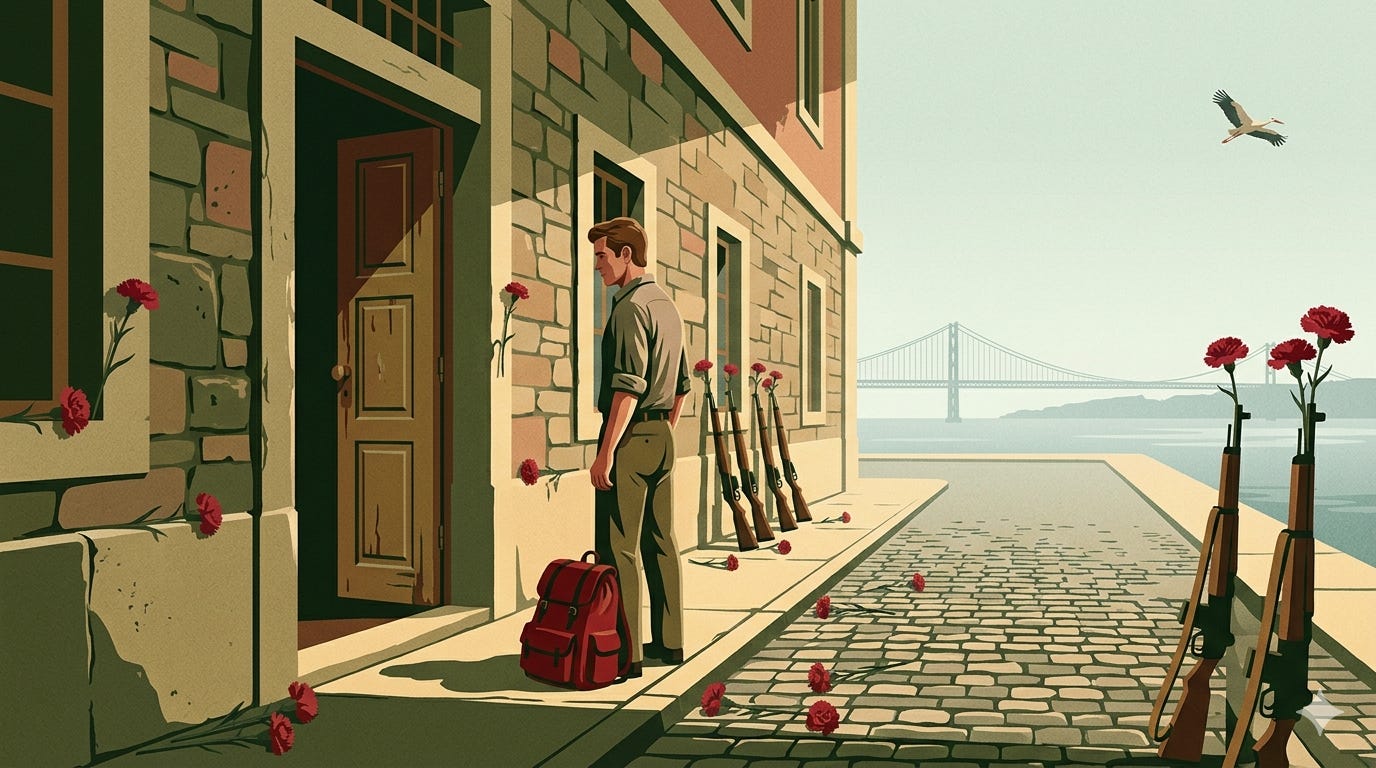
Those of you who read the final part of After the Fall will know that I visited the barracks in Lisbon where Marcello Caetano spent the last hours of his regime on April 25, 1974 — including the armchair he sat in while Portugal changed around him. That visit is part of a longer story I am now writing about my full trip to Portugal, a walk along the country’s southwest Atlantic coast called the Fisherman’s Trail.
The Curious Wanderer is where that story lives. It is my travel newsletter — moved from Patreon to Substack because the platform was simply not working — and the first series, Trail of Tides, weaves the walk together with Portuguese history: the Age of Discovery, the Carnation Revolution, and what four decades of EU membership changed in a country that spent too long on the margins of Europe.
If After the Fall made you curious about Portugal, this is the natural next chapter.
Subscribe here. You would be among the very first readers.
Stay inspired,
Alexander
And now, the first The Curious Wanderer newsletter and the first in the Portugal hike series called Trail of Tides:
Alternatively, you can directly access the story by clicking here.
Trail of Tides: Walking Portugal’s Fisherman’s Trail
A new series begins — walking Portugal’s southwest coast from Sines to the edge of the continent
Mar 24, 2026
Dear friends,
I am back home on my Dutch island. Luna is on the windowsill, watching the North Sea wind play with the leaves in the garden. My walking poles are in the cupboard. My shoes — more about those shortly — are dry but not forgiven.
Over the next few weeks, I’d like to take you along to Portugal.
This is The Curious Wanderer, a newsletter I started because I found publishing on Patreon too complicated, and because my travel writing has no natural home in my other publications. The Planet is for political analysis. Daybreak Notes & Beans is for daily hope. Screen Skills is clearly not about travel skills. And More is for follow-ups and updates. None of these is the right place for a story about long hikes on slippery rocks, wartime spies, storks nesting on Atlantic cliffs, and the sailors who once disappeared over the horizon from the southernmost point of continental Europe. So here we are.
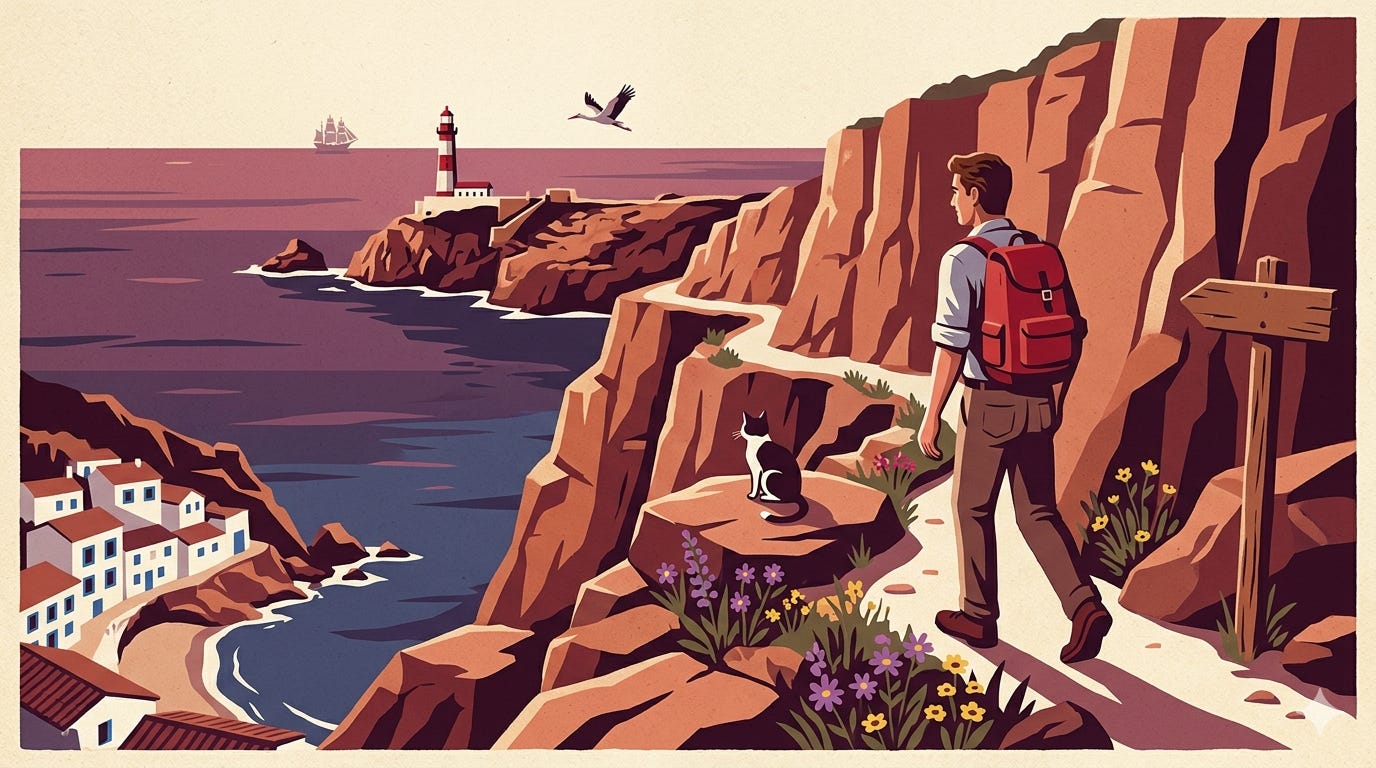
I walked the Fisherman’s Trail, a route of about 200 kilometers along Portugal’s southwest coast, from Sines down to Cabo São Vicente, the southwestern tip of mainland Europe. This cape was the last land explorers saw before heading into the unknown during the Age of Discovery. Vasco da Gama passed it, as did Bartolomeu Dias. The cape, once a farewell point for explorers, was now my destination. It felt like the right place to walk toward.
Trail of Tides
I am calling this series “Trail of Tides.” The Atlantic never stops moving beside you as you walk, but the story I want to tell is larger than a walk. Portugal has a particular pull on me, and I think I understand why. The Netherlands and Portugal are both small countries on the western edge of Europe, both shaped entirely by the sea, both with histories that reach absurdly far beyond what their size would suggest. Portugal’s moment came around 1500, ours around 1600. For a while, we were rivals, competing for the same spice routes, the same ocean crossings, occasionally fighting over the same ports. We ended up with surprisingly similar results: blue tiles on buildings, trading posts on distant shores, and a national identity built not on territory but on water and the willingness to sail into the unknown.
Portugal was once at the center of the world, launching ships, drawing maps, and opening routes. Then it spent five centuries stepping away from that stage. A long dictatorship. Decades of isolation. A revolution in 1974 was so gentle that soldiers placed carnation flowers in their rifle barrels rather than firing them. And then, slowly, returning to Europe and thus returning to itself.
I want to walk you through that story while walking you through the country. The tides in the title are both literal and historical.
But all journeys start somewhere. Mine started on a gray Monday morning in Oslo, waiting for a tram.
The red backpack in the mist
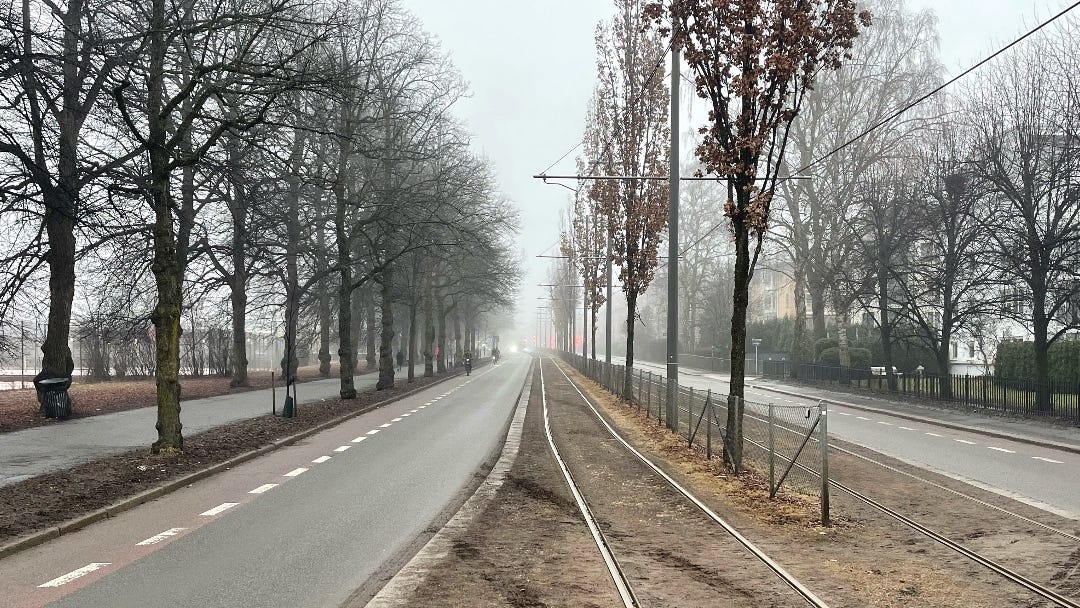
The photo I took at the tram stop that morning is almost entirely black and white. Not because I set the camera that way. That was the actual color of Oslo at eight in the morning in early March: gray sky, gray pavement, the tram tracks disappearing in the mist ahead of me. I was wearing my red backpack, and I remember thinking it was probably the only spot of color in the entire street. Years ago, I bought it red for exactly this reason — so that cars could see me when I was walking on roads to Santiago de Compostela without a proper shoulder.
I was the only person at the stop without a winter coat. Everyone else was dressed for March in Oslo the way March in Oslo requires. I stood shivering in my fleece, waiting for the tram to appear out of the gray.
The bag was heavier than necessary. I had packed my laptop. The idea was that I would walk during the days and write at night, maintaining some version of my usual publishing rhythm while also covering a week or more of hiking along the Atlantic coastline. This had a certain logic to it. The logic would be tested almost immediately.
From the tram, I took a fast train to the airport. My flight was at eleven. I sat at the coffee bar with a flat white and, at exactly ten o’clock, took my first “10 AM Moment-photo” of the trip — a wide airport concourse with subdued electric lights and passengers with wheeled bags making their way toward gates.
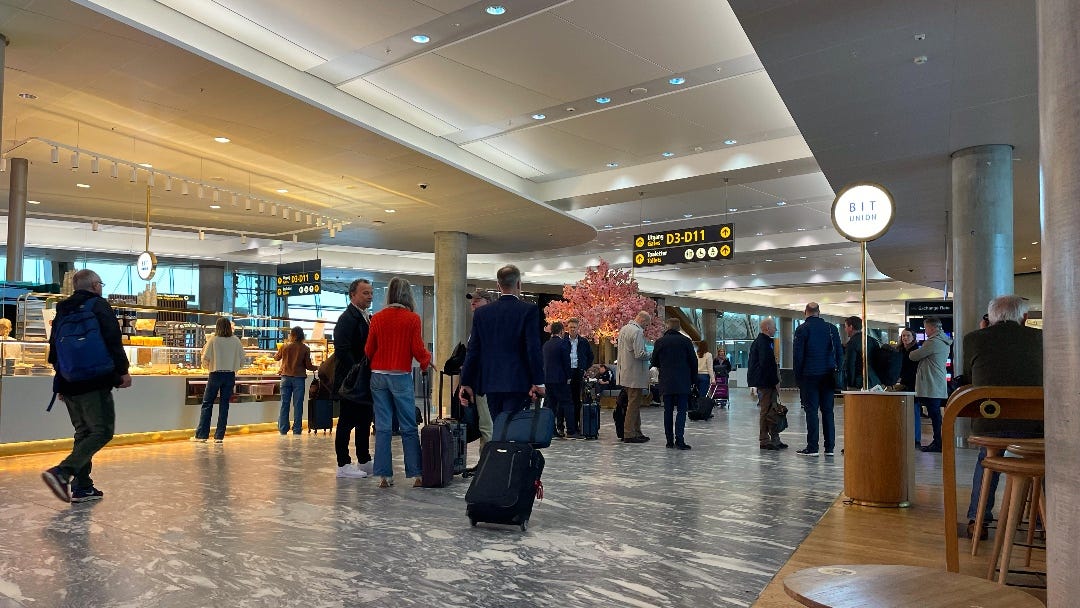
This is a small tradition I keep from Patreon while traveling: my alarm goes off at ten every morning, and I take a photo of whatever I see at that moment. No staging, no waiting for better light, no walking to find a better angle; just capturing what’s there. This discipline gives a more honest record of travel; there are more airport coffee bars and rainy windows than most travel writing suggests. When I reach more dramatic places than an Oslo departure lounge, the ten o’clock photos will get more interesting on their own. For now, it’s an airport. Even here, I looked for something worth framing. I stayed in my chair at the coffee bar and lowered the camera, letting the concourse lines lead toward a distant gate, with travelers pulling their suitcases in the same direction, heading toward whatever awaited them. I tried to let my 10 a.m. accuracy and my striving for good composition go hand in hand.
Finding beauty
I have been a photographer my whole life, and the ten o’clock tradition is connected to something I try to do in all my work: look for beauty wherever I happen to be. You may recognize this from Daybreak Notes & Beans, where I look for beauty in the news. Here I look for it in whatever the world offers at a random moment on a Tuesday morning. The discipline is the point. Anyone can photograph a sunset. Photographing an airport departure lounge and still finding something worth looking at takes a different kind of attention.
On the plane, I read everything I could find about the Fisherman’s Trail. I had originally planned this trip for November. Then I checked the forecasts: rain, more rain, storms, flooding, mud. I moved it to March. March is when the wildflowers appear along the path. March is when the storks return to their cliff nests. March is when the early morning sunshine on the Atlantic turns into the particular rich tone that appears in some of my photographs of this coast.
The trail’s name already tells you something about it. The Fisherman’s Trail — in Portuguese, Trilho dos Pescadores — was originally not designed by tourism boards or walking federations. It was carved, over many centuries, by local fishermen who needed to reach their nets and traps along the cliffs. They found the routes that worked: the paths that followed the cliff edges without going over them, the descents to the coves where the fish came in, the lines through the dunes that stayed passable in wet weather. Practical paths, made by people who depended on getting to the sea and back again.
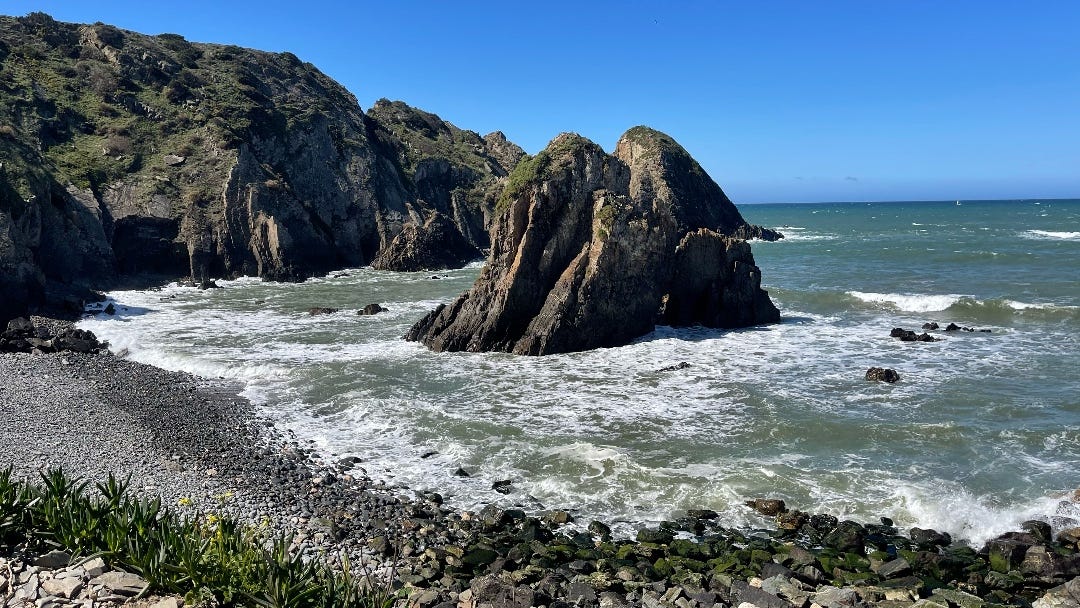
These routes fell out of regular use as fishing methods changed. They were formally revived and inaugurated in 2012 as part of the Rota Vicentina — a network of walking trails across the Alentejo coast designed to bring sustainable tourism to one of Europe’s least developed stretches of coastline. The idea was to protect the area from mass tourism by attracting a different kind of visitor: the kind who walks.
It worked, perhaps more than anyone expected. Condé Nast Traveller named the Fisherman’s Trail one of the six most beautiful coastal walking trails in the world. The path now draws hikers from across Europe and beyond, typically covering the route in eleven to thirteen stages over one to two weeks. Unlike the Camino de Santiago — which I have walked twice and which is never truly quiet — the Fisherman’s Trail still has long stretches of complete solitude. For twenty kilometers, you may not pass a village, a café, or -depending on your timing and chosen route- another person. Just the cliffs and the Atlantic and whatever you brought in your backpack.
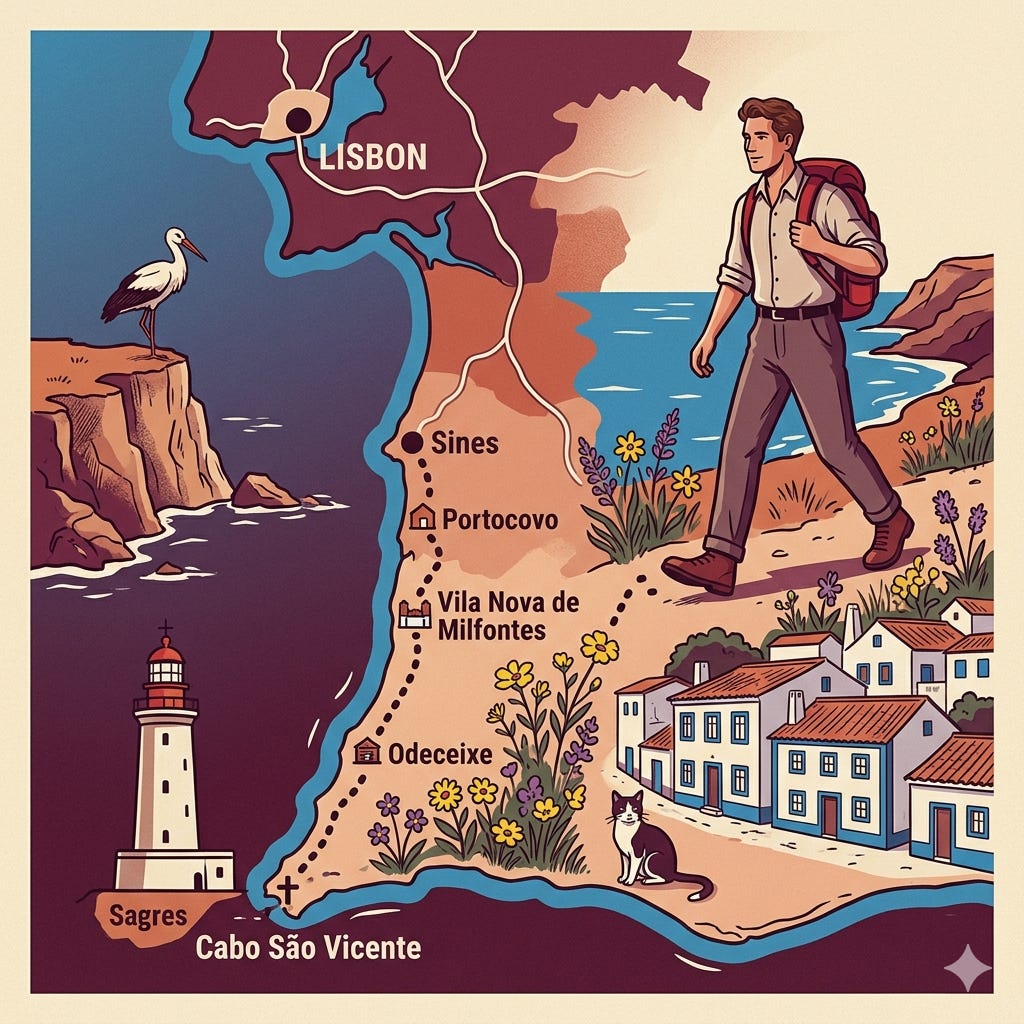
What makes it different from other long-distance walks I have done is harder to describe. The Camino Francés in northern Spain is rich in history — you walk roads that pilgrims have used for a thousand years, cross bridges built by medieval queens, and sleep in towns whose entire identity was formed by the passing of walkers. The Fisherman’s Trail is different. The history here is not on the path but visible from it: the fortresses built against pirates and invaders, the fishing villages that were already old when Vasco da Gama set sail, the rock formations along the cliffs that record two hundred million years of pressure and movement. You walk through present-day Portugal while the past layers itself around you.
If you want to follow the whole journey, consider becoming a subscriber. Paid subscribers also get access to the full archive and directly support the writing:
I knew some of this before I got on the plane in Oslo. I also knew that in early March, after the worst winter flooding the region had seen in years, I had no reliable way of knowing how much of the trail I would actually be able to walk.
What I could not find out, despite thorough searching, was whether the trail was fully open. There had been serious flooding throughout January and February. Cliff paths had been undermined by waves. Volunteers were checking sections for stability. The trail’s website issued warnings in February, then went quiet — the most recent social media posts using the trail’s hashtag showed walking conditions from the previous year. I had made an alternative plan in case the route was closed.
That was the situation when the plane landed in Lisbon.
First impressions through a rain-covered window
The first photograph I took in Portugal was through an airport window covered in drops. You can see another aircraft blurred behind a curtain of rain. It is not a beautiful picture.
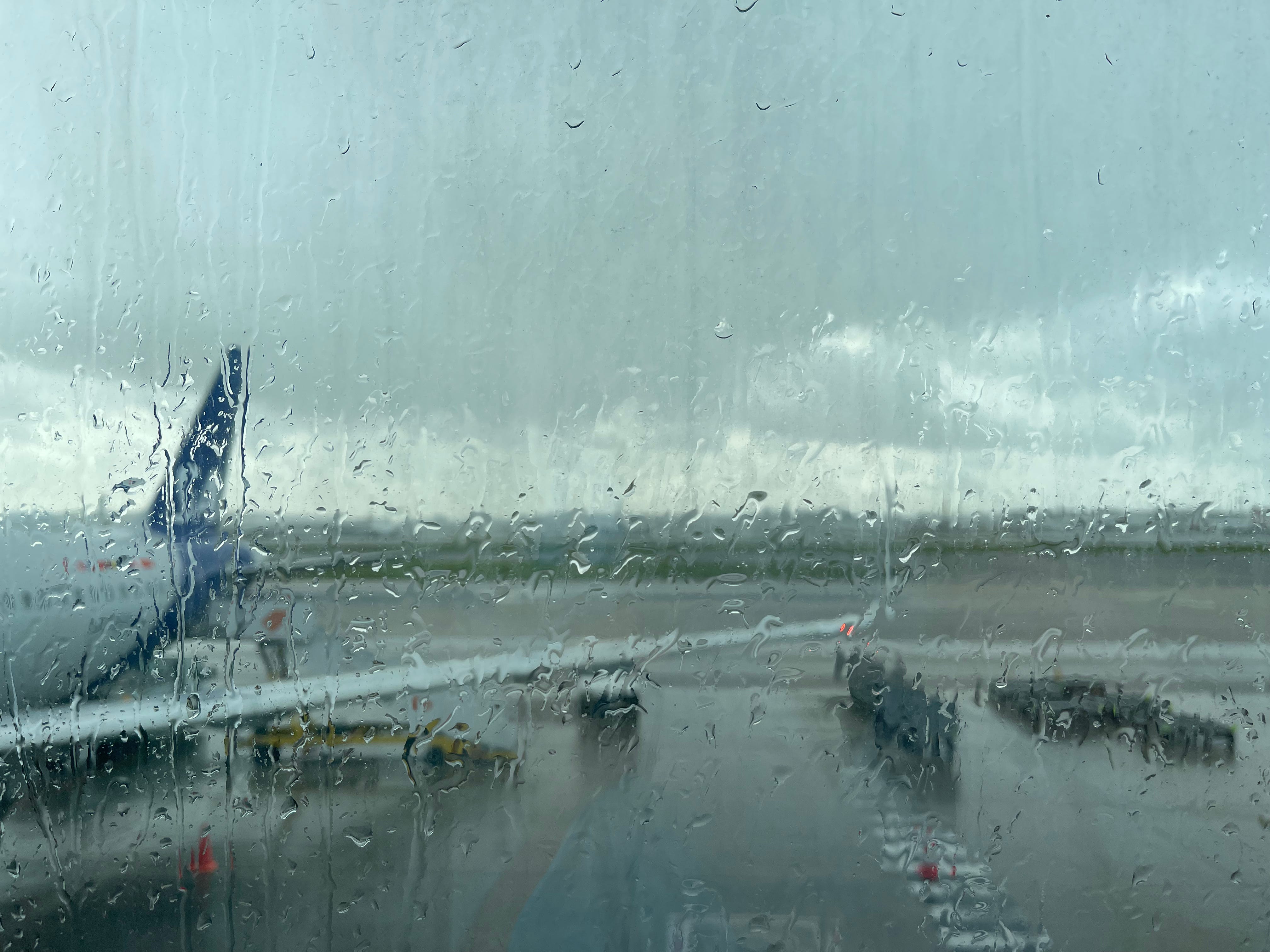
Intellectually, I understood that this rain is a Lisbon mood, not an Alentejo forecast. The southwest coast, where I would be walking, has its distinct climate. But landing in heavy rain at the start of a walking trip still feels like the country is making a point.
My backpack was the first bag on the luggage belt. I chose to interpret this as a good sign. In Lisbon, as in most European cities, the metro was easy to navigate, and I was soon at the hotel. It was standard in every way, and I immediately forgot its name, which tells you everything you need to know.
Then I went out to see the city.
Finding a coat and stability
I have to explain the shoes.
I had brought walking shoes that, from a distance, looked like ordinary sneakers. They are marketed as walking shoes. The sole in the product photographs features a pattern that suggests grip and traction. What it does not convey — and what I discovered within the first ten minutes of walking the wet streets of Lisbon — is that this particular sole has the grip of a ski boot on the city’s famous pavements.
The pavements of Lisbon are made of small white stones, set in elaborate patterns. They are among the most beautiful walking surfaces in the world. After rain, they are also among the most treacherous. I made my way down the street in small, careful steps, arms slightly out, moving like a man trying very hard not to fall in public. Meanwhile, Lisbon’s residents walked past me at normal speed on the same surface without a second thought.
This was going to be a problem. The Fisherman’s Trail involves cliff paths. Some sections descend steeply on loose rock. It was March. It rains in March. The idea of doing that in shoes that could not even handle wet paving stones was not comfortable. I should have checked online before I bought them, though the thought that a well-known brand would use some kind of plastic sole hadn’t crossed my mind. It is said to be durable and cushioning, but I wish the rubber compound had been stickier and rubberier.
The temperature was another surprise. I thought Portugal in March would be mild—not summer in the Algarve, but maybe warm enough for no coat. That first evening, Lisbon felt more like a Dutch autumn, with a sea wind added. Everyone outside wore winter coats. I just had a thin fleece.
I walked to Decathlon and found a lightweight jacket for just twenty-four euros. It didn’t roll up as small as I wanted—my bag was already full—but it was small enough to work. I also bought sunscreen, because no amount of gray weather in Lisbon changes how strong the sun is on the southwest coast, especially for those walking north to south.
Then I walked for two hours and let the city sink in.
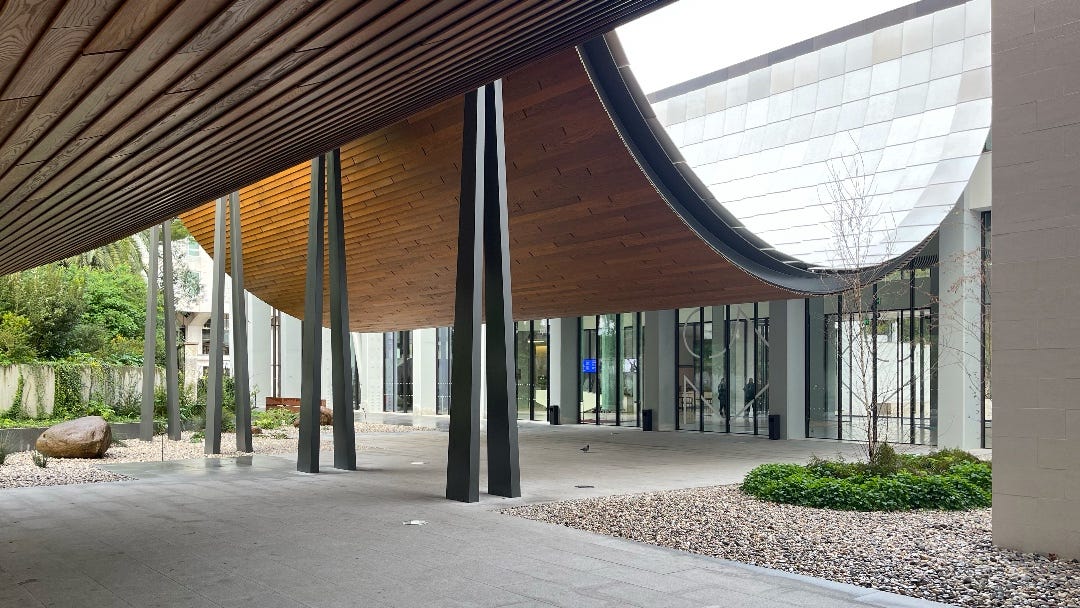
I passed the Gulbenkian garden without planning to. It was on my route to the metro station, and I did not realize until I was inside it that this was the garden of the Calouste Gulbenkian Foundation — the museum a friend had specifically told me to visit, created by an Armenian oil magnate who chose Lisbon as his final home and left it one of the finest art collections in Europe. I made a note to return the next morning if time allowed.
I walked through a small park with palm trees, past cafes still busy at nine in the evening. I passed a wall with graffiti, a street kiosk selling magazines, and a supermarket. None of it was especially scenic, but it all felt right. I enjoyed exploring the city, even though I hadn’t visited the tourist center yet.
What struck me as I walked those ordinary streets was how truly European Lisbon felt. I don’t mean a vague international vibe, but the unique texture of a city that’s grown over centuries without a master plan: cafes next to offices, old buildings beside new ones, beautiful street paving next to plain graffiti. It feels like a place where people live, work, argue, and make coffee—not a city arranged for tourists. It’s clean, thriving, confident, and has its own character within a continent that’s becoming more alike.
I say this as someone who considers himself more European than Dutch. Portugal took decades to get here. The EU’s membership, which began in 1986, did not bring modernity overnight. That story is worth telling properly, and it starts centuries earlier, and I will get to it.
But that evening, I just walked and let Lisbon be itself.
What comes next
The next morning, a good friend who lives near Lisbon offered to show me the western part of the peninsula—Estoril, Cascais, Sintra, and the cliffs at Cabo da Roca. This area is packed with history: exiled royal families and wartime spies passed through during World War II, Cabo da Roca marks the westernmost point of continental Europe, and small cafes have served local specialties the same way since 1862.
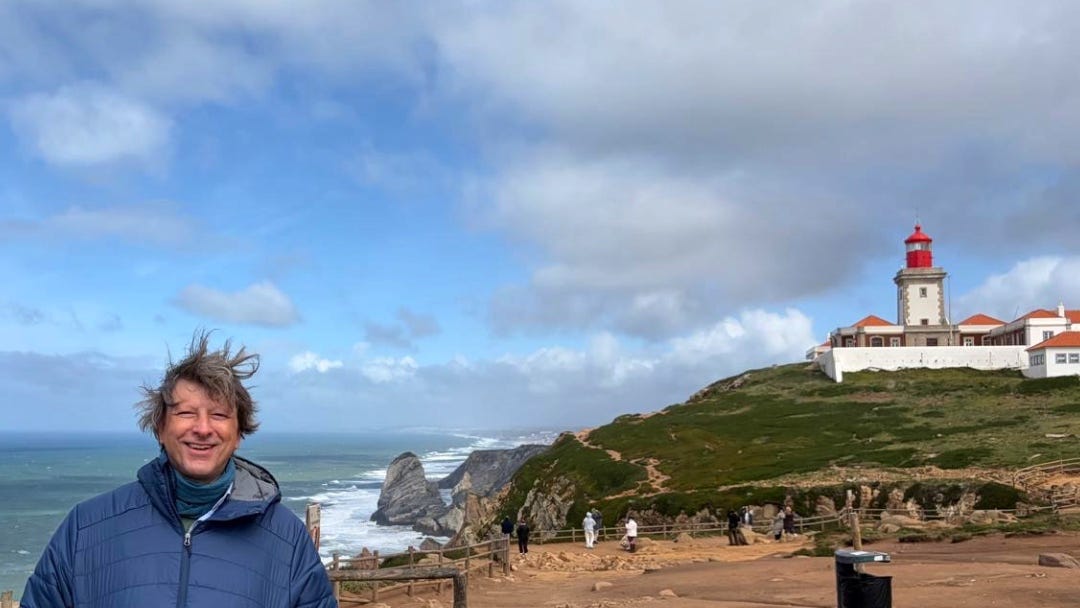
Cabo da Roca is where I first understood, physically, that I was at the edge of something. Standing on those cliffs with the Atlantic below, I finally felt the scale of what the Portuguese had once done. This was the last land they touched before sailing into complete uncertainty. The wind there was so strong that I had to hold my phone with both hands to take a photograph. The world appeared very large.
That’s where the next letter will begin.
Cheers,
Alexander
The Curious Wanderer is where I share what my other newsletters have no room for: travel writing, walks through history, museum visits, and the kind of observations that only arrive when you move through a place slowly, on foot, with time to think.
The Trail of Tides series — which starts with this letter — follows my walk along Portugal’s Fisherman’s Trail in March 2026. Over the coming weeks, I will take you from the misty Oslo departure to the lighthouse at Cabo São Vicente, the southwestern tip of Europe. Along the way: wartime spies in Estoril, a revolution so gentle soldiers put flowers in their rifle barrels, storks nesting on Atlantic cliffs, and the age of the explorers who left from this same coastline into complete uncertainty.
If you want to follow the whole journey, consider becoming a paid subscriber. Paid subscribers also get access to the full archive and directly support the writing:

Life can be, is, so busy and complicated there’s little time to smell the roses; or in today’s multifaceted gush of news, to be present and still find some time for art, fun, Sun and some things actually hopeful, realistic and optimistic. Thank God for pets, some occasional good news and authors with a smile on their face, holding a cup of Jo. ( and generally a black cat somewhere in the drawing)
This Dutchman, Alexander Verbeek, with his Daily Beans, The Planet, Screen Shots and now the Curious Wanderer offers such a refreshing swallow of events and places that slide easily into the tummy, provide comfort, and don’t require an antacid to digest.
I encourage all to subscribe or buy our friend a coffee, Jamie
"Trail of Tides, weaves the walk together with Portuguese history: the Age of Discovery, the Carnation Revolution, and what four decades of EU membership changed in a country that spent too long on the margins of Europe."
Looking forward to both the continuing travel adventures of Portugal and the upcoming series of The Planet.